The building entrance in Hiroshima was busy enough for the mat to keep darkening under shoes, wheels, and quick lunch-rush footsteps.
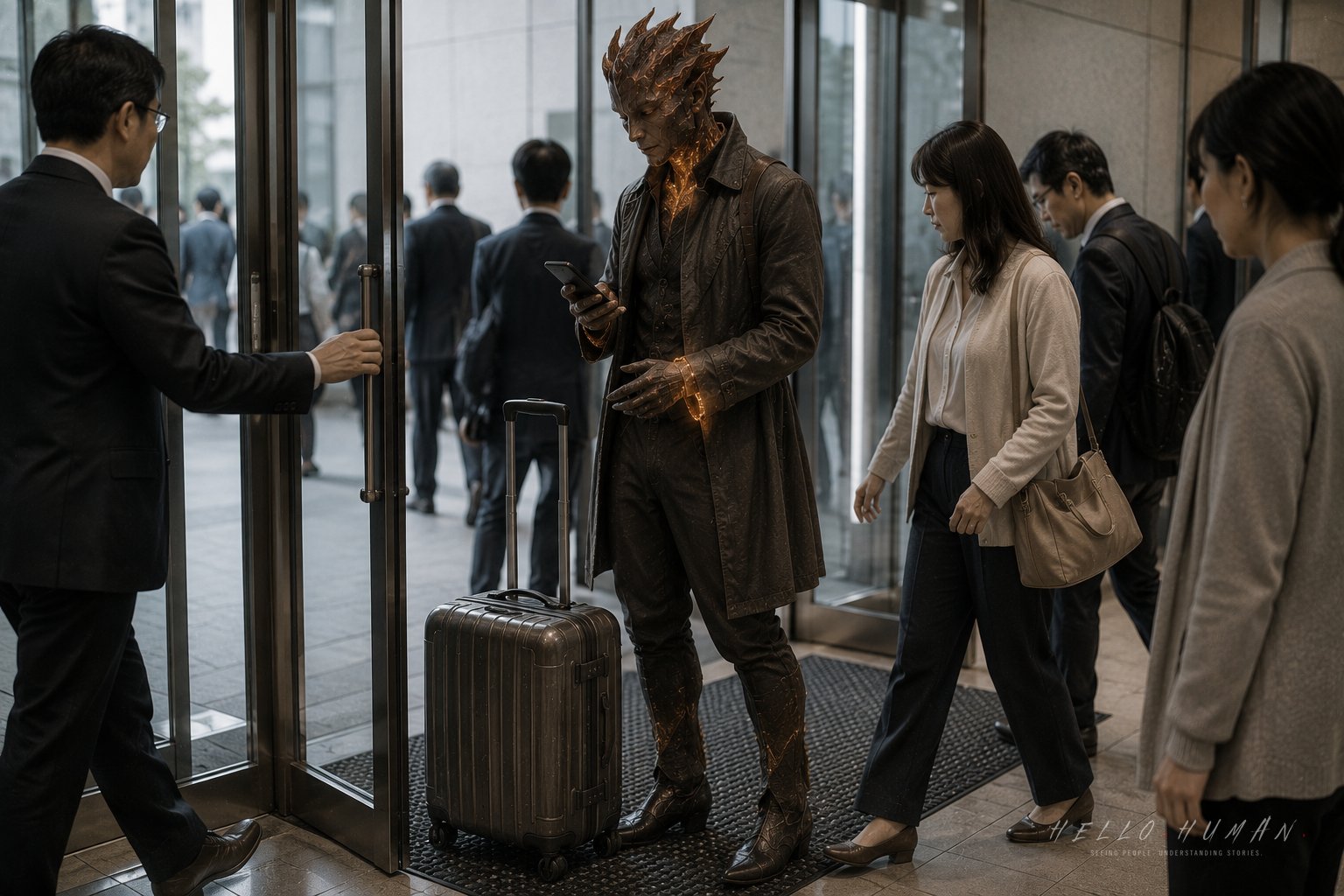
An Ember-vein resident came through the glass door with a small suitcase rolling behind one careful hand, then stopped on the entrance mat to check the phone in his other hand.
Observation 01The Moment Something Changed

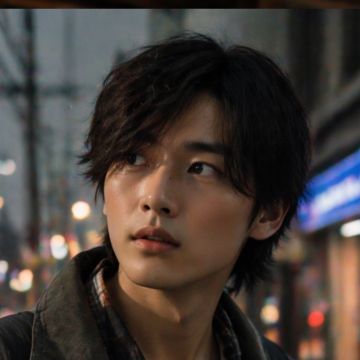
The suitcase wheels settled into the textured mat with a small rubber sound. The traveler leaned slightly over the phone, smoke-warm cheek depth still and focused under the entrance light.
His body was compact and contained, a smoked-ember figure in a practical coat with heat-diffusing collar lining. At his cuffs, vented seams released a faint, low warmth that stayed close to his wrists.
The phone map refreshed slowly. He remained there, exactly between outside and inside, with the suitcase handle angled behind him.
A person entering from the street reached for the door and then paused, hand still on the metal pull. Another person just inside the lobby shortened their step to avoid the suitcase wheel.
The Ember-vein resident noticed the shift but thought the pause belonged to the door. He turned the phone slightly, trying to confirm the floor number before moving deeper into the building.
The visible cue was the suitcase stopped on the building entrance mat, turning a transition area into a waiting spot.
The Japanese reaction stayed indirect: a hand paused on the door, a step shortened, and shoulders angled around the suitcase.
The traveler first understood only that people were entering carefully, not that his stillness had interrupted the entrance rhythm.
Observation 02The Reactions No One Explained
The person at the door kept one hand on the handle and looked past the traveler, toward the open lobby floor beyond the mat. The look did not ask him to leave. It searched for a route.
A woman carrying a lunch bag stepped in, saw the suitcase, and drew her elbows closer to her sides. She placed one foot on the mat, then waited instead of brushing past him.
Behind her, a man in office clothes adjusted his path before he even entered, turning his shoulders so the doorway would not become crowded. His gaze dropped briefly to the suitcase wheels.
Inside the lobby, someone near the elevator glanced back toward the entrance, then moved one step farther from the door. The small movement made room for the pressure building at the threshold.
The traveler’s careful close-hand posture was meant to keep heat and contact controlled in public spaces. But here, the problem was not heat. It was the suitcase and his body holding the only clean crossing point between the street and the lobby.
The visible cue repeated through the group: people looked for a path around the suitcase before they looked at the traveler.
The Japanese reaction preserved calm movement by waiting, narrowing shoulders, and adjusting steps instead of confronting him directly.
The traveler began to sense that the entrance mat had a job: absorb the outside, mark the change, and keep people moving through.
Observation 03What the Traveler Finally Understood
The Ember-vein resident lowered the phone before the floor number loaded. He pulled the suitcase handle upright and rolled the wheels off the building entrance mat.
He moved two full steps into the lobby, close to the wall but clear of the door swing. Only then did he stop again and look down at the phone.
The person at the door entered at once. The woman with the lunch bag crossed the mat in one smooth motion, and the man behind her came in without changing his shoulder angle.
The traveler felt the difference before he named it. The mat darkened under moving feet again, not under waiting wheels.
A faint ember speck appeared at his cuff vent, then disappeared as his hand settled around the suitcase handle. He understood that the entrance mat was not simply a convenient flat place to pause. It was the building’s transition lane, and stopping there made everyone else negotiate around him.
The correction was physical first: move the suitcase past the mat, clear the threshold, and check the phone from the side of the lobby.
The Japanese response changed through restored flow, with people entering smoothly once the transition space opened.
The traveler understood that a brief phone check can still block a shared system when it happens at the exact point everyone must pass through.
Practical Takeaway
At a building entrance in Japan, roll your suitcase fully past the entrance mat before checking your phone. Move to the side of the lobby, away from the door swing and the direct path of people entering behind you.
This matters because entrance mats are transition spaces. They handle shoes, wheels, umbrellas, and the first step inside, so stopping there makes others slow down or quietly route around you.
Pay attention when someone pauses with a hand on the door, angles their shoulders around your suitcase, or looks down at your wheels. Those small signals often mean the entrance path needs to be cleared.