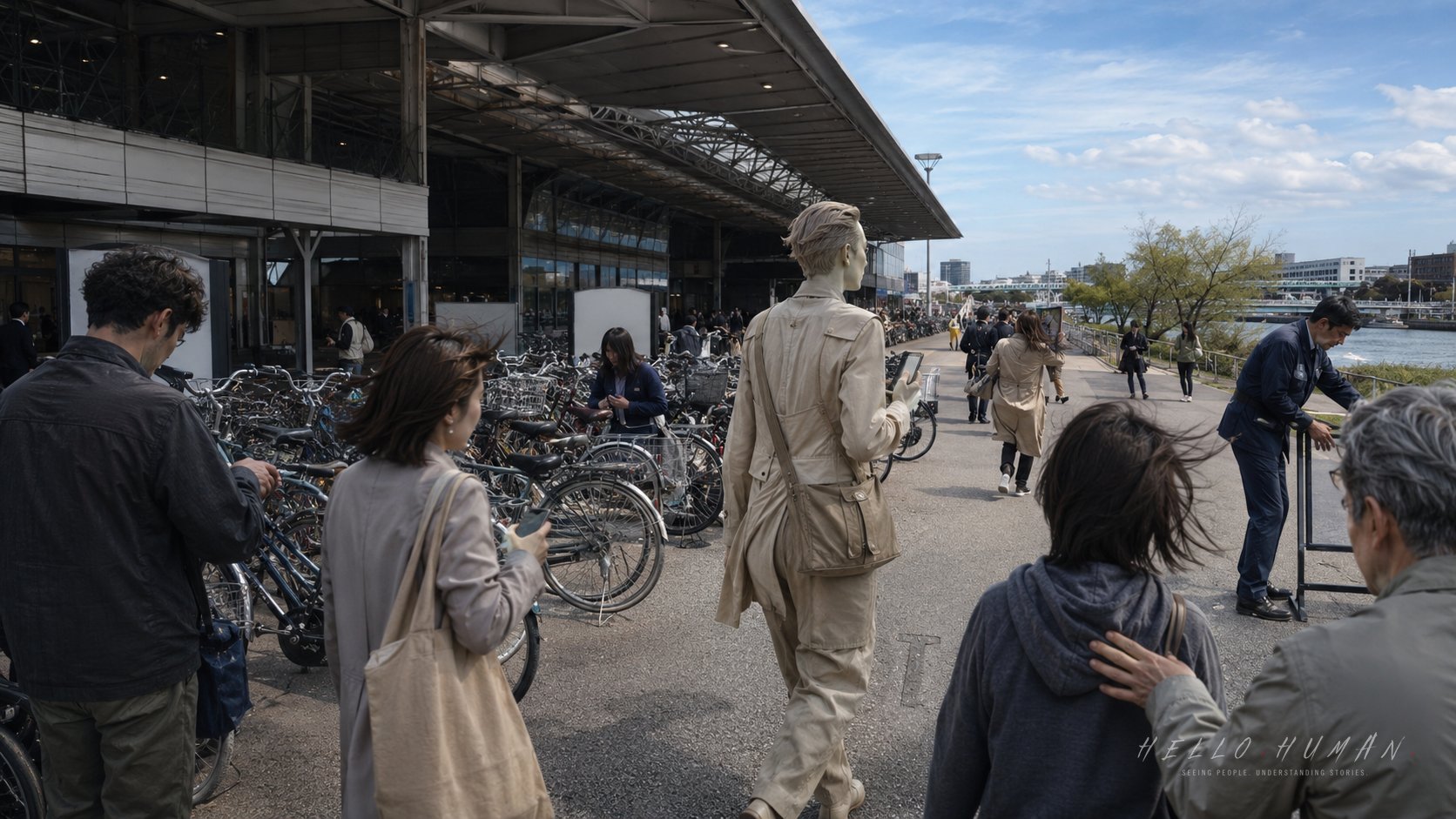
The wind moved through the bicycle parking lot beside the Kyoto station exit in uneven pushes. Plastic rain covers clicked against baskets, and a line of rental bikes rocked softly in their locks.
Alen stood at the edge of the lot with his phone still lit in one hand. The warning tone had stopped, the sky above the station remained bright, and the riverside path entrance was visible beyond the row of bicycles.
Observation 01The Moment Something Changed

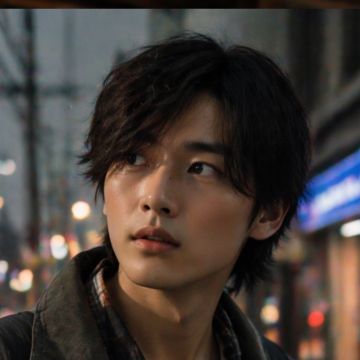
The message on Alen’s phone had arrived in a sharp burst that made several people stop at once. He did not read every line. He saw the warning header, the river name, and a place that sounded close but not exactly where he stood.
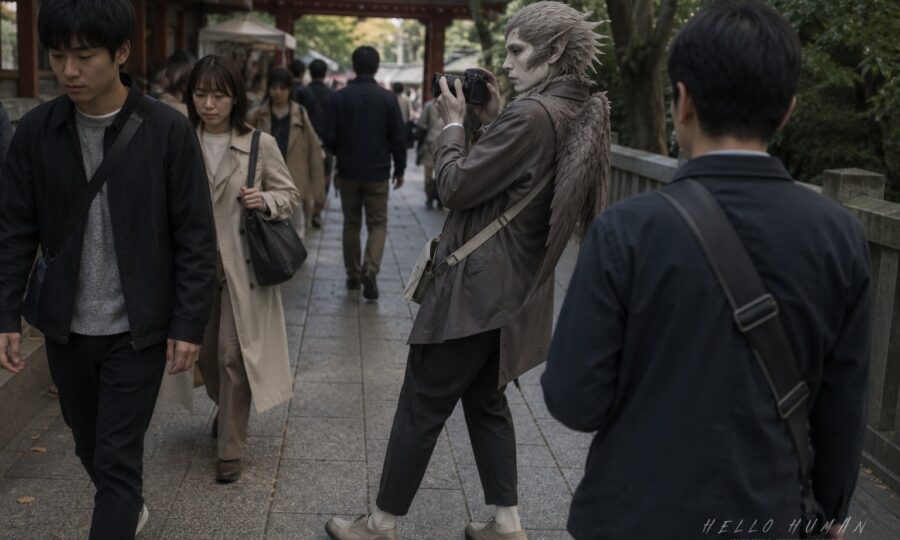
He was a Wing-root observer, humanlike but not fully human, with a quiet shoulder-root structure held under practical clothing. The seams of his jacket relieved pressure around folded wing roots, and an offset shoulder bag ran beneath the contour instead of cutting across it. A soft luminous edge showed along one cheek when he turned toward the light.
The station roof threw a clean rectangle of brightness across the bicycle lot. Tourists moved in and out with maps, paper cups, and small bags of souvenirs. Nothing in front of him looked like danger.
Alen lowered the phone only halfway and took a step toward the riverside path. His open still hand stayed close to his body, and a faint muted gold light softened at the shoulder seam where his attention tightened.
A man unlocking a bicycle stopped with the key still in the lock. He looked once toward the path, then back at the phone in his own hand. He did not speak to Alen. He simply stayed where he was.
The visible cue was Alen moving toward the riverside path while the phone warning was still fresh in his hand and the station sky looked deceptively clear.
The Japanese reaction began with hesitation: a bicycle key paused, eyes returned to phones, and bodies stopped choosing the riverside direction.
Alen first understood the warning as information to consider, not as a cue to change movement immediately.
Observation 02The Reactions No One Explained
A woman with a folding umbrella checked her phone twice. The first time, she read quickly. The second time, she lifted the screen closer to her face, then turned away from the riverside path and moved back toward the station doors.
Two visitors near the bicycle map stopped comparing routes. One of them pointed at the sky with a small uncertain smile, but the other shook his head once and looked toward a notice board near the exit. Their voices dropped until the wind covered them.
A station attendant outside the glass doors looked toward the bicycle lot, then toward the path entrance. He did not call out. He adjusted the portable sign near his feet so it faced the flow of people leaving the station, then stepped back under the roof.
An older man securing a child’s helmet placed his palm lightly on the child’s shoulder before the child could roll the bicycle forward. His gaze followed Alen’s movement for a moment, then lowered to the warning on his own phone.
Alen slowed, but not enough. The visible air still argued against the warning. The sky was pale, the pavement was dry, and the lunch crowd still carried shopping bags as if the day were ordinary.
Then he noticed what had changed around him. The people who knew the area were no longer reading the sky as the main evidence. They were reading the warning, the river direction, the wind, and each other’s stopped hands.
The visible cue repeated through the crowd: phones checked twice, route talk stopped, a sign was turned outward, and a child’s bicycle was held back before moving.
The Japanese reactions avoided dramatic warning, but they quietly redirected attention away from the clear sky and toward the safer station side.
Alen began to understand that disaster urgency can appear first as halted movement, not as visible rain or visible flooding.
Observation 03What the Traveler Finally Understood
Alen’s first correction was physical. He stopped at the last row of bicycles, turned his body away from the riverside path, and brought the phone up again with both hands close to his chest.
The shoulder-root seams under his jacket eased as he faced the station. The faint body-bound glow at the seam opening softened, no longer pulled toward the path. His offset bag settled beneath the wing-root contour without sliding.
He read the message more slowly this time. The warning was not describing only the sky above him. It was describing water, distance, timing, and a place where conditions could change before they looked serious from the station exit.
The man with the bicycle key finished locking the bicycle again instead of taking it out. The woman with the umbrella reentered the station. The station attendant gave Alen one brief glance, then looked away as if the correction had already been accepted.
Alen stepped back under the roof and moved toward the station concourse. He did not need anyone to scold him. The safer direction had been visible in the way other people stopped making the walk he was about to make.
He understood then that in Japan, warnings are not always accompanied by obvious weather at the exact place you stand. A clear patch of sky can be local and temporary. The phone warning, the adjusted sign, and the quiet change in movement belonged to a larger map than his eyes could hold.
The physical correction came first: Alen stopped, turned away from the riverside path, and reread the warning under the station roof.
The Japanese response eased through direction, not conversation: bicycles stayed locked, people returned indoors, and the attendant let the corrected movement stand without comment.
Alen finally understood that disaster cues often ask for action before the danger becomes visually convincing nearby.
Practical Takeaway
When a phone warning arrives in Japan, especially near a river, coast, slope, or underground passage, stop moving toward the risky area first. Read the message fully from a safer place before deciding that the sky looks fine.
This matters socially because warnings are shared safety cues. Nearby people may not correct you directly, but their stopped bicycles, repeated phone checks, and quiet changes of direction can show that the warning has already changed the flow.
Pay attention when local people turn back, look at notices twice, hold children or bicycles in place, or avoid a path that still looks normal. Those reactions can mean the danger is about timing and location, not only what is visible above you.