The platform marker was only a pair of pale shapes on the floor, worn by thousands of shoes and easy to miss if no one was standing correctly.
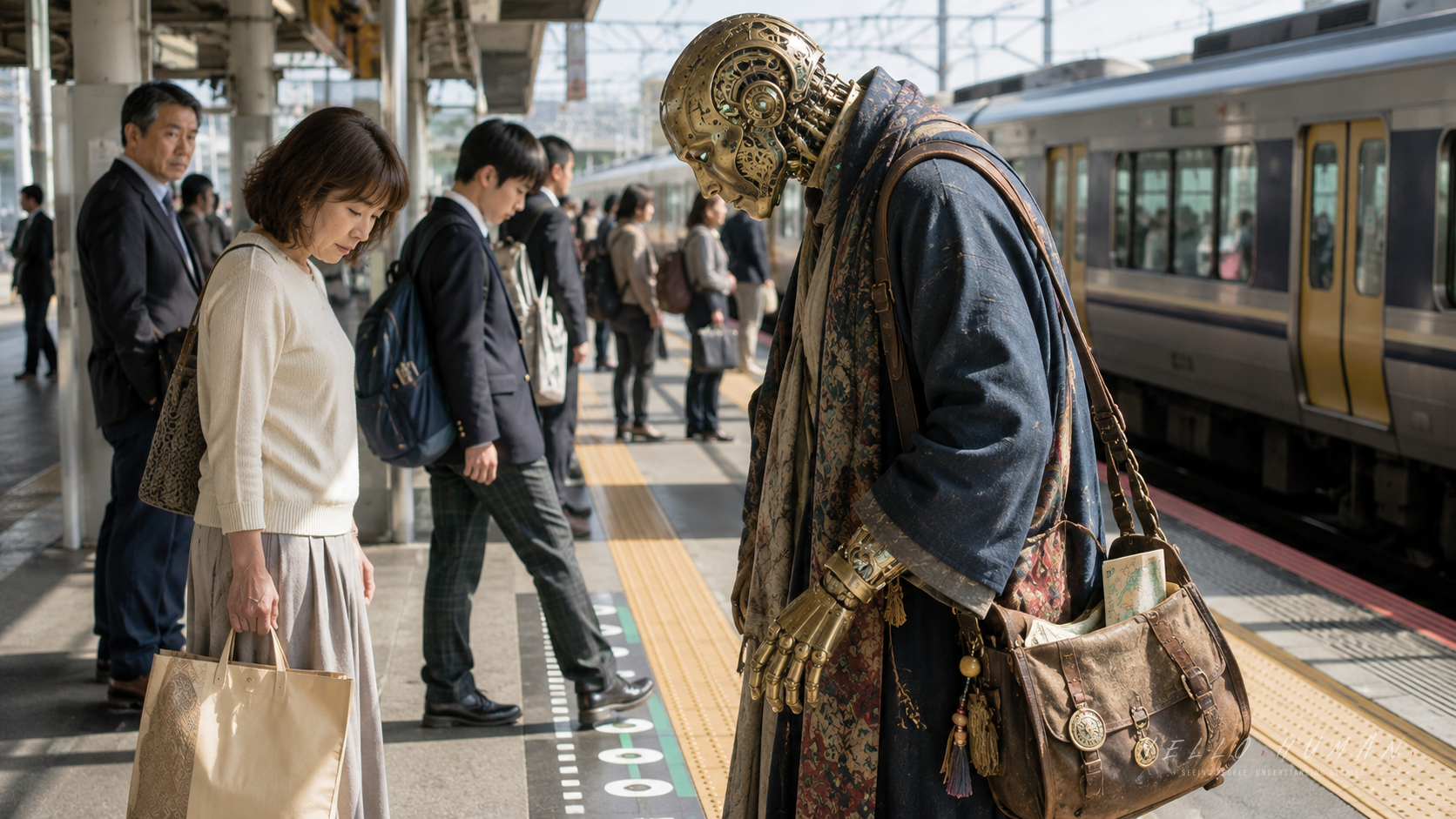
Varo stopped beside it, rested his brass elbow over one edge, and looked down the track as if the train would explain where everyone belonged.
Observation 01The Moment Something Changed

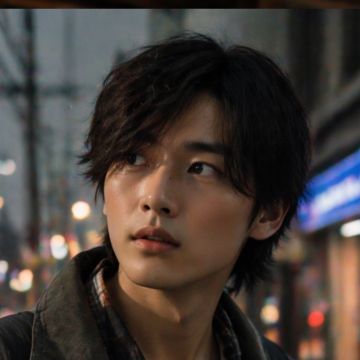
The station platform in Osaka was bright with afternoon light and the flat echo of train announcements. People waited in small, separate columns where the floor told them to wait, leaving the door area open before the train arrived.
Varo was a brass-jointed commuter, built with elbows that moved in quiet gearlike arcs and fingers spaced too far apart for human gloves. Matte worn metal showed at his wrists, while a dark travel coat softened the rest of his angular frame.
He had seen Japanese passengers stand neatly behind floor markings in other stations. Here, the shapes were more faded, partly hidden by shadows from the platform roof. He chose a place that seemed close enough.
Close enough was the problem. His shoulder bag hung low. His left brass elbow, folded across his body, covered one side of the queue marker. From behind him, the beginning of the line disappeared.
A woman carrying a small shopping bag approached, slowed, and looked down near Varo’s feet. She did not step beside him. She did not step directly behind him. She chose a position a little to the left, leaving an uncertain gap.
The visual mistake was small: Varo covered part of the platform queue marker while standing just outside its intended line.
No one told him he was in the wrong place.
The first reaction was a passenger slowing down and checking the floor before choosing a less certain position.
Observation 02The Reactions No One Explained
A student with a backpack arrived next. He looked at the woman, then at Varo, then at the floor. His foot started toward the hidden marker and stopped before touching the edge of Varo’s bag.
He stood behind the woman instead, but not fully behind her. The line became a soft diagonal, pointing away from the marker it was supposed to follow.
An older man in a cap came after them. He waited near the pillar, pretending to check the train information above the track. His eyes dropped twice to Varo’s elbow and the covered shape below it.
The next pair of passengers separated without speaking. One stood behind the student. The other moved to the next door’s marker, even though that line was longer.
Varo heard the change before he understood it. His brass wrist gave a faint dry click, the sound it made when surrounding motion paused out of rhythm. The platform was still orderly, but the order had bent around him.
No one looked angry. That made the signal harder, not easier. On Varo’s route system, a misplaced body would be corrected by a light or a tone. Here, the correction was made of glances, gaps, and people choosing discomfort quietly.
The train had not arrived yet, but boarding had already begun in the shape of the waiting line. Varo was standing at the place where that shape was supposed to be visible.
The Japanese passengers reacted by preserving calm rather than confronting the mistake.
Their bodies showed the problem: the queue curved, split, and avoided the covered marker.
When several people look at the floor before choosing where to stand, the floor may be carrying the rule.
Observation 03What the Traveler Finally Understood
Varo looked down at his own elbow. The worn brass edge sat exactly over the shape on the floor. His bag strap crossed the rest of it like a second mistake.
He stepped back first, then sideways. His elbow unfolded with a quiet mechanical breath, and he pulled the shoulder bag against his front. The full queue marker appeared between his shoes and the platform edge.
The woman with the shopping bag moved almost immediately. Not far, just enough to align herself with the marker. The student adjusted behind her. The older man left the pillar and joined the end of the line.
Nothing was announced. No one thanked him. The platform simply became easier to read.
When the train lights appeared down the track, Varo stood with his feet behind the visible mark and his elbows close to his coat. He left the open space in front of the door empty, though the empty space made him feel briefly exposed.
Then the train stopped, the doors opened, and the passengers inside stepped out through the clear gap. Only after that did Varo’s line move forward. The order had been there from the beginning. He had only needed to uncover it.
The correction was physical: step back, reveal the marker, join the line’s actual shape.
The platform relaxed as soon as people could see where to wait and where to leave space for exiting passengers.
Varo learned that on Japanese platforms, small floor markings often organize the whole boarding rhythm.
Practical Takeaway
On a train platform in Japan, look for floor markers that show where to queue, where train doors will open, and where to leave space. Keep your bags, elbows, luggage, and feet from covering those markers.
This matters because passengers often rely on visible lines and floor cues instead of spoken instructions. When a marker is hidden or someone stands slightly outside it, the queue can become uncertain before the train even arrives.
Pay attention when people slow down near you, glance at the ground, or form a bent line around your position. Those small adjustments may mean you need to step back, uncover the marker, or realign with the waiting column.