The small cinema auditorium in Nagoya had only five rows, and every seat seemed close enough to hear a coat sleeve move.
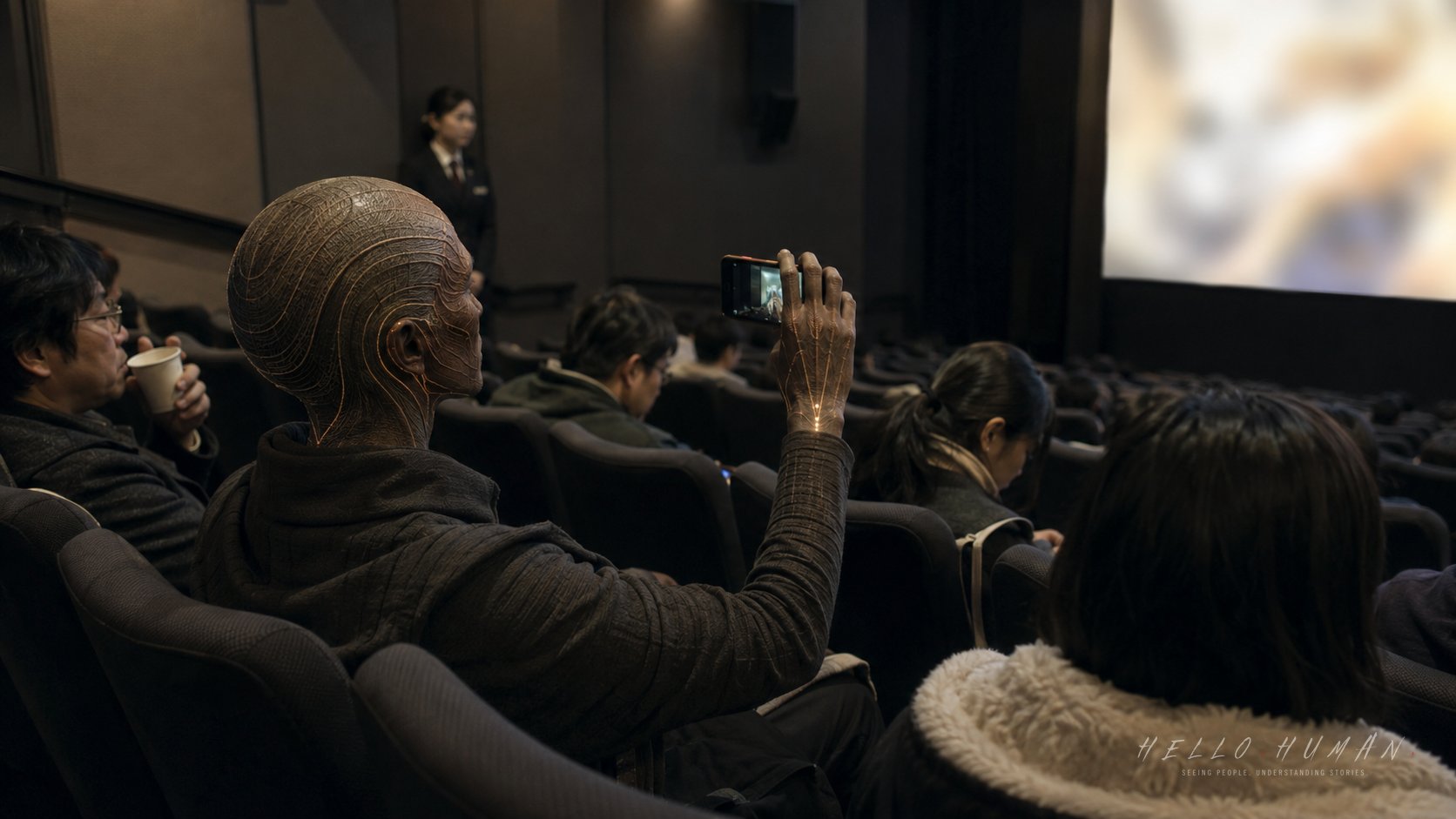
On the screen, a winter street scene turned blue and quiet. Then Ren’s phone rose just above the seatback, its rectangle catching the dim light.
Observation 01The Moment Something Changed

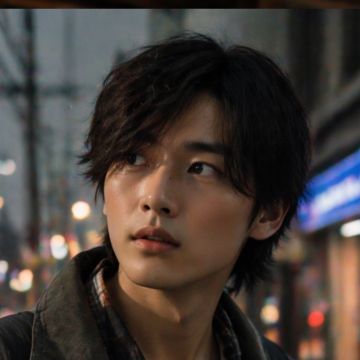
Ren had checked the sign near the entrance. No flash photography. They remembered that clearly. So when the film reached a beautiful quiet scene, they thought a three-second clip would not disturb anyone if the phone stayed low.
Their fingers curved around the device with a careful non-human grip. Fine thread-like tendons showed under the warm neutral skin of their wrists, and the woven texture along their neck tightened as the auditorium fell even more silent.
The phone did not make a loud noise. There was no flash. But its small screen became a second source of attention inside the dark room, and Ren’s recording posture pulled a thin line through the shared view.
A woman two seats away did not speak. She lowered her eyes toward her lap, then returned them to the screen without turning her head fully. The person in front of Ren shifted one shoulder inward, as if making their own body smaller around the interruption.
The visible cue was Ren’s phone raised during a quiet theater scene, even without flash or obvious noise.
The Japanese reaction began with lowered eyes, a small shoulder shift, and the room’s sound rhythm tightening around the device.
Ren still believed they were following the written rule, not yet sensing that the gesture itself had entered the shared space.
Observation 02The Reactions No One Explained
The man on Ren’s left paused with a paper cup halfway to his mouth. The straw did not touch the lid. His eyes stayed on the screen, but his hand waited until Ren’s phone lowered slightly.
A pair of students in the row behind stopped whispering about the film. One of them looked toward the aisle, not directly at Ren, and the other tucked her phone deeper into her tote bag as if answering a question no one had asked.
Near the wall, an attendant standing in the side shadow shifted weight from one foot to the other. The movement was small, almost part of the darkness, but her gaze made a triangle between Ren’s hand, the screen, and the faces of the viewers nearby.
The scene on the movie screen remained quiet. That quiet made every small object larger: the phone edge, the thumb hovering near the record button, the soft rub of Ren’s sleeve against the seat arm.
Ren felt the woven lines at their wrists tighten. They had not meant to take something from the room. They only wanted to remember the image. But the people around them were not reacting to ownership alone. They were reacting to the way the phone broke the shared agreement to look forward together.
The visible cue was not only the phone screen, but Ren’s recording posture during a moment everyone else was holding still.
The Japanese reactions stayed indirect: a paused drink, a phone tucked away, whispers stopping, and an attendant’s quiet eye-line check.
Ren began to understand that the room was asking for matching intensity, not just the absence of flash.
Observation 03What the Traveler Finally Understood
Ren stopped recording before the clip finished. Their thumb left the screen. Then they turned the phone face-down against their chest, dimmed it completely, and slid it into the soft inner pocket sewn along their jacket seam.
The movement was slow enough for the people nearby to see it, but not dramatic enough to ask for attention. Ren lowered both hands to their lap. The collar seams of their clothing aligned with the woven lines of their neck, and the faint glow at the wrist settled into a narrow thread.
The man with the cup finally drank. The students behind Ren returned their eyes to the screen. The attendant near the wall stopped watching Ren’s hand and let her gaze move back across the row.
Ren kept still through the rest of the scene. They noticed how the audience did not laugh loudly when a small joke appeared, and how no one checked messages during the long pause before the ending. The room was not strict in a cold way. It was carefully synchronized.
What Ren understood near the final credits was simple and physical: in a Japanese theater, a phone can become too bright, too active, or too individually focused even when it does not flash. The rule was not only printed at the entrance. It was also carried by everyone’s posture in the dark.
The visible cue changed when Ren turned the phone dark and put it fully away instead of keeping it ready in their hand.
The Japanese reaction softened through resumed sipping, eyes returning forward, and the attendant’s attention leaving Ren’s row.
Ren understood that quiet entertainment spaces are shared by matching the room’s attention, not by testing the narrowest wording of a sign.
Practical Takeaway
In a Japanese cinema, theater, or small screening room, keep your phone away once the program begins. Do not record short clips, brighten the screen, check messages, or hold the device ready, even if you believe only flash photography is specifically banned.
This matters socially because the audience is sharing one direction of attention. A small phone gesture can pull eyes, sound, and awareness away from the screen, especially during quiet scenes or intimate performances.
Pay attention when people nearby become stiller, lower their eyes, pause a hand, angle away, or when staff quietly watch your device rather than speaking immediately. Those reactions often mean the room is asking you to lower your intensity.