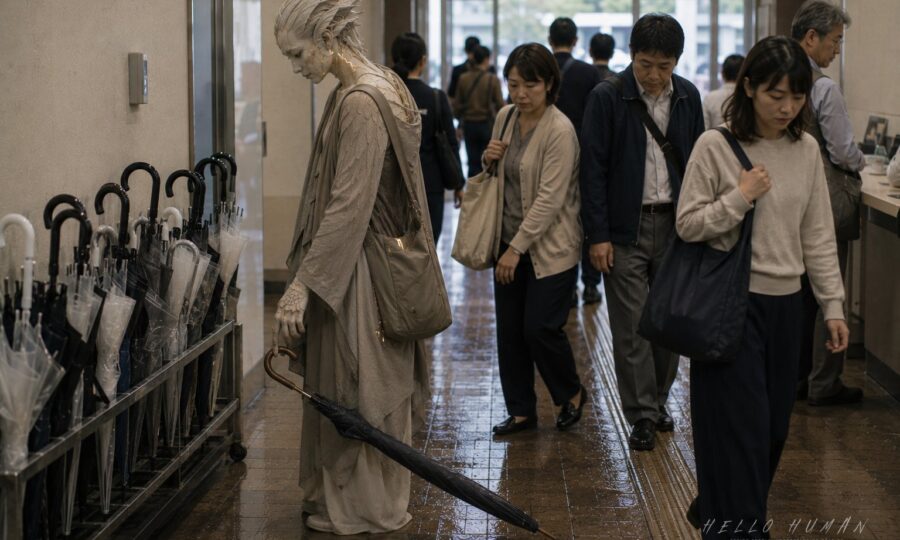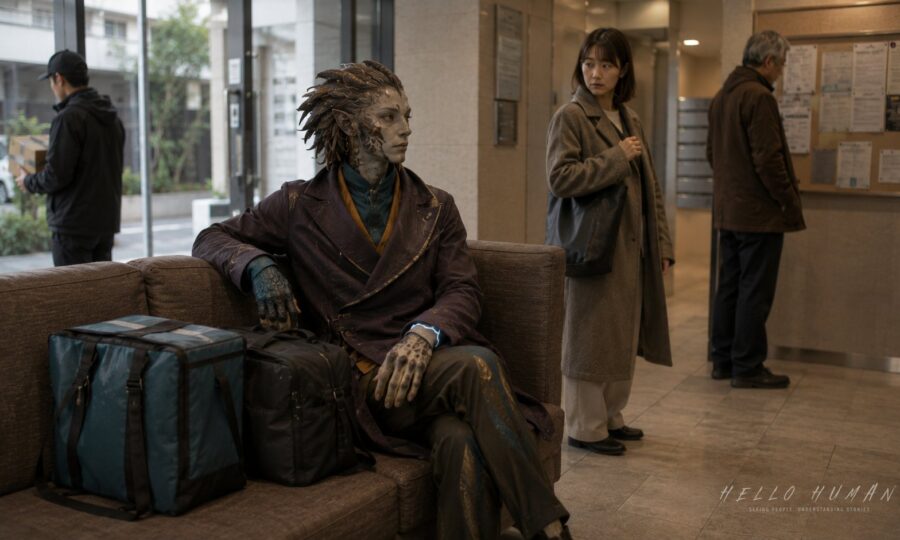
The clinic waiting room in Kyoto was warm enough to fog the lower edge of the glass door. Outside, a cold afternoon pressed against the narrow street.
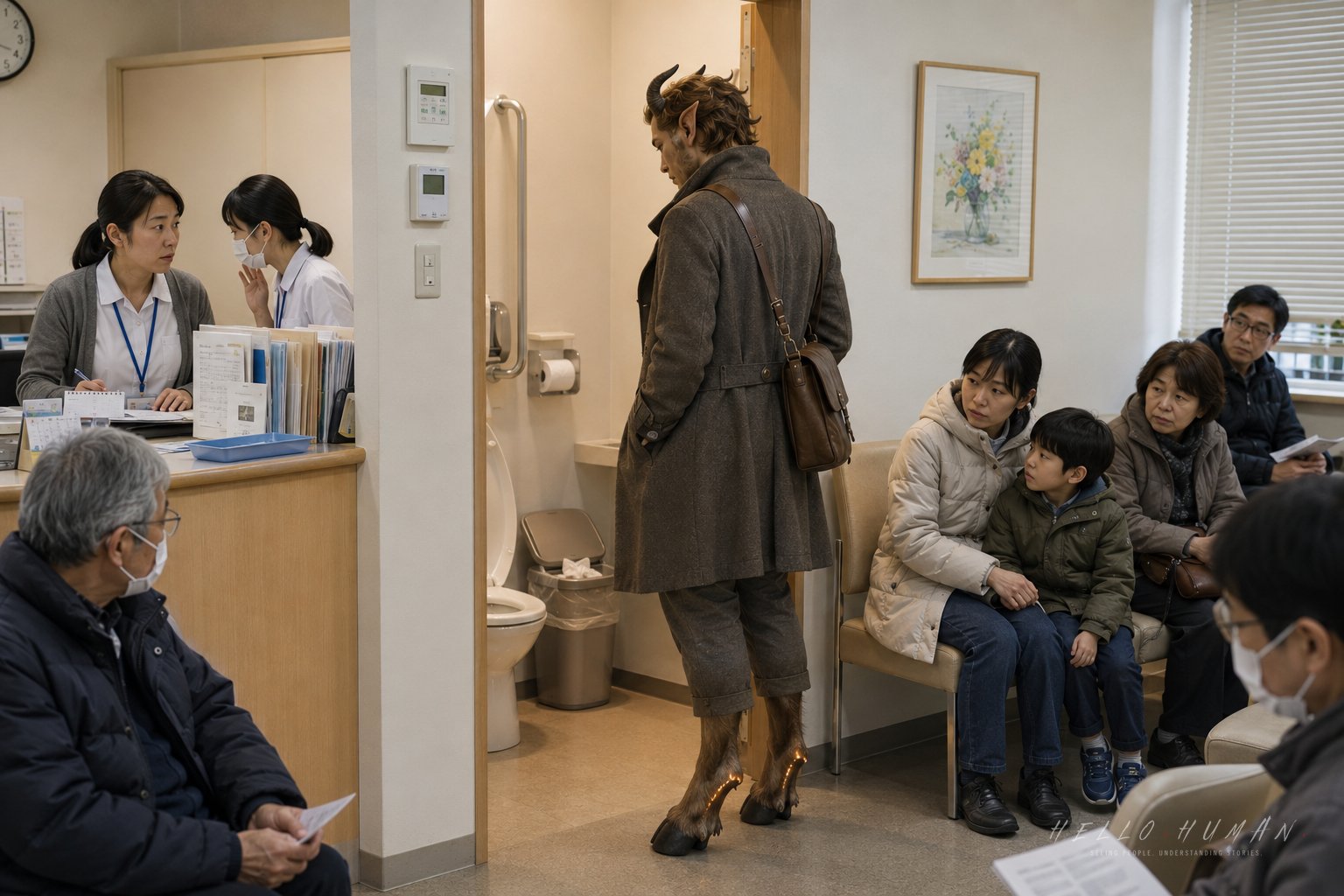
Noa stepped out of the small restroom with careful hoof-step posture, one hand still near the sleeve of their fitted coat. Behind them, the side bin lid settled with a soft plastic click.
Observation 01The Moment Something Changed


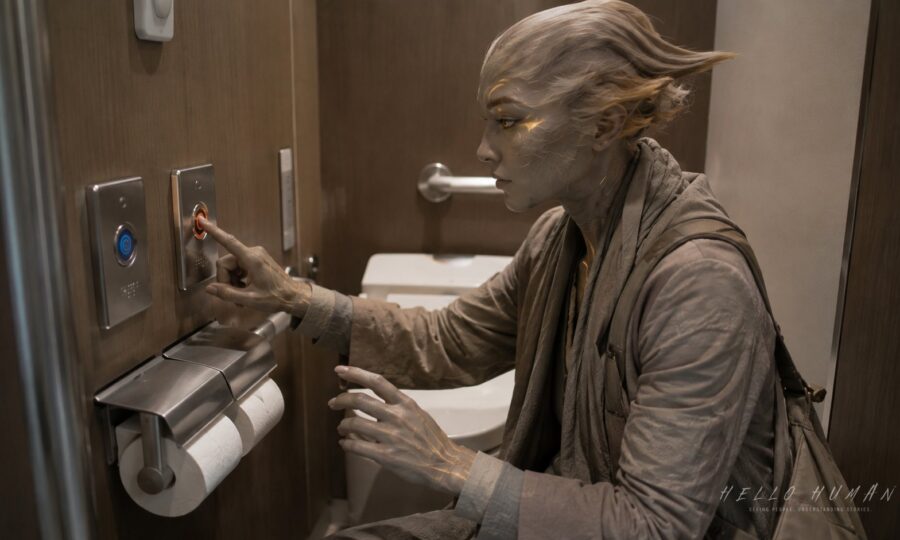
Noa had been trying to be careful. The restroom was small, with a white tank, a narrow sink, a paper holder, and a lidded bin tucked beside the wall. The pipes looked older than the clinic’s bright waiting room.
In the urgency of the moment, Noa remembered places where paper was not flushed. They folded the used toilet paper into a tight square, pressed the bin pedal with the dark shadow of one hoof, and dropped it inside as quietly as possible.
Nothing in the room shouted that this was wrong. No alarm sounded. No sign flashed. The flush worked with a modest rush of water, and Noa washed their light quick hands twice, trying to leave the space cleaner than they had found it.
When the door opened, a mother waiting with a child glanced first at Noa’s face, then past Noa into the restroom. Her eyes stopped low, near the bin. She gathered the child’s coat sleeve into her hand and shifted half a step away from the door.
The receptionist looked up from a clipboard. Her hand paused above the next patient’s file. She did not call out. She only looked toward the restroom entrance, then toward the small laminated notice near the sink area, then lowered her voice when she spoke to the nurse beside her.
The visible cue was not dramatic: a small side bin in a clinic restroom had been used for folded toilet paper.
The Japanese reaction began through glances, paused hands, and a slight change in distance near the restroom door.
Noa first understood only that their careful action had created a quiet hesitation outside the room.
Observation 02The Reactions No One Explained
An older patient rose when the restroom became free. He took two steps, noticed the receptionist’s glance, and slowed before entering. His shoulders angled toward the sink notice, and his hand hovered briefly near the doorframe before he went in.
A nurse came out from the hallway with a tray of thermometers. She saw the restroom door move, saw the receptionist’s lowered expression, and changed her route by the smallest amount. Instead of passing close to the restroom, she crossed behind the chairs and kept her tray level.
The mother with the child bent down and whispered something that made the child stop swinging their legs. The child looked toward the restroom, then quickly back at their shoes. The mother’s hand remained on the child’s sleeve, not tight, but present.
At the reception desk, the staff member opened a drawer and took out a thin plastic liner. She did it with ordinary hands, almost hidden by routine. Still, the waiting room noticed the movement: one man lowered his magazine, and another patient turned his knees slightly away from the restroom path.
Noa sat very still. Their short integrated horn buds caught the fluorescent light when they bowed their head, and the tawny texture along their cheeks warmed under embarrassment. The hoof-shadow seams near their ankles went still, the way they did when people silently made space around them.
No one had accused them of anything. That made the mistake harder to locate. The clinic did not become unfriendly; it became careful. Voices lowered, hands grew precise, and the restroom became a point everyone moved around without naming.
Noa looked again at the laminated notice. The words had seemed ordinary before: please flush toilet paper. In the urgency of use, they had treated the small bin as a safer choice. Now the notice looked less like a suggestion and more like a quiet boundary for everyone who used the room after them.
The visible cue spread through the waiting room as staff prepared to handle the bin and patients adjusted their movement around the restroom.
The Japanese reactions stayed indirect: lowered voices, route changes, knees turned away, and a notice checked without public blame.
Noa began to understand that the absence of open alarm did not mean the action had fit the shared hygiene rhythm.
Observation 03What the Traveler Finally Understood
Noa stood before the staff member reached the restroom. They bowed once, small and low, then pointed gently toward the door and said they had misunderstood. Their voice did not try to fill the waiting room.
The receptionist’s expression softened, but she did not make the explanation large. She gave Noa a small disposal bag and a pair of disposable gloves from behind the desk. Her hand stayed low, keeping the exchange private.
Noa returned to the restroom and corrected the physical mistake first. They removed the folded paper from the side bin with the gloves, sealed it in the small bag as instructed, and left the bin clean for its intended use. Their careful hoof placement made almost no sound on the clinic floor.
When Noa came out, they washed again at the outer sink. The nurse passed behind them and no longer changed her route. The mother let go of the child’s sleeve. The waiting room did not celebrate; it simply resumed.
Only after the room’s rhythm returned did the practical meaning settle. In many Japanese restrooms, toilet paper is designed and expected to be flushed unless a clear local notice says otherwise. A small side bin is usually for other sanitary disposal, not a substitute for the toilet.
The misunderstanding came from trying to protect the place without trusting the local system. Noa had thought delicacy meant avoiding the flush. In this clinic, delicacy meant following the posted instruction so the next person, the staff, and the shared air of the waiting room did not have to absorb an avoidable problem.
Noa sat again with their knees close and their coat hem arranged around their backward-balanced hips. The shame became smaller once it had a shape. It was not that the clinic had rejected them. It had quietly shown where the shared boundary was.
The visible correction came first: Noa returned to the restroom, removed the wrongly placed paper, and restored the side bin.
The Japanese response changed through resumed movement, relaxed hands, and the disappearance of careful avoidance around the restroom door.
Noa understood that in a shared hygiene space, guessing privately can create public work for others.
Practical Takeaway
In a Japanese clinic restroom, flush toilet paper unless there is a clear notice telling you not to. Do not use a small side bin for toilet paper just because the restroom looks old, small, or delicate.
This matters because restroom use is part of a shared hygiene rhythm. A wrong disposal choice may force staff to handle something avoidable and may make other patients quietly adjust their movement without wanting to embarrass you.
Pay attention when people glance toward the restroom bin, check a notice, lower their voices near the door, or shift children and bags away from the area. Those small reactions can mean the object is in the wrong place, even if no one says so directly.