Late morning light slid through the convenience store windows in Kyoto, brightening the wet umbrellas stacked near the entrance.
In the snack aisle, office workers moved quickly, choosing lunch items with one hand while checking the register line with the other.
Observation 01The Moment Something Changed

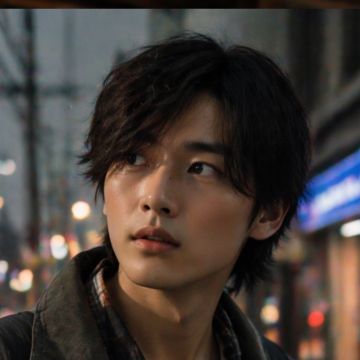
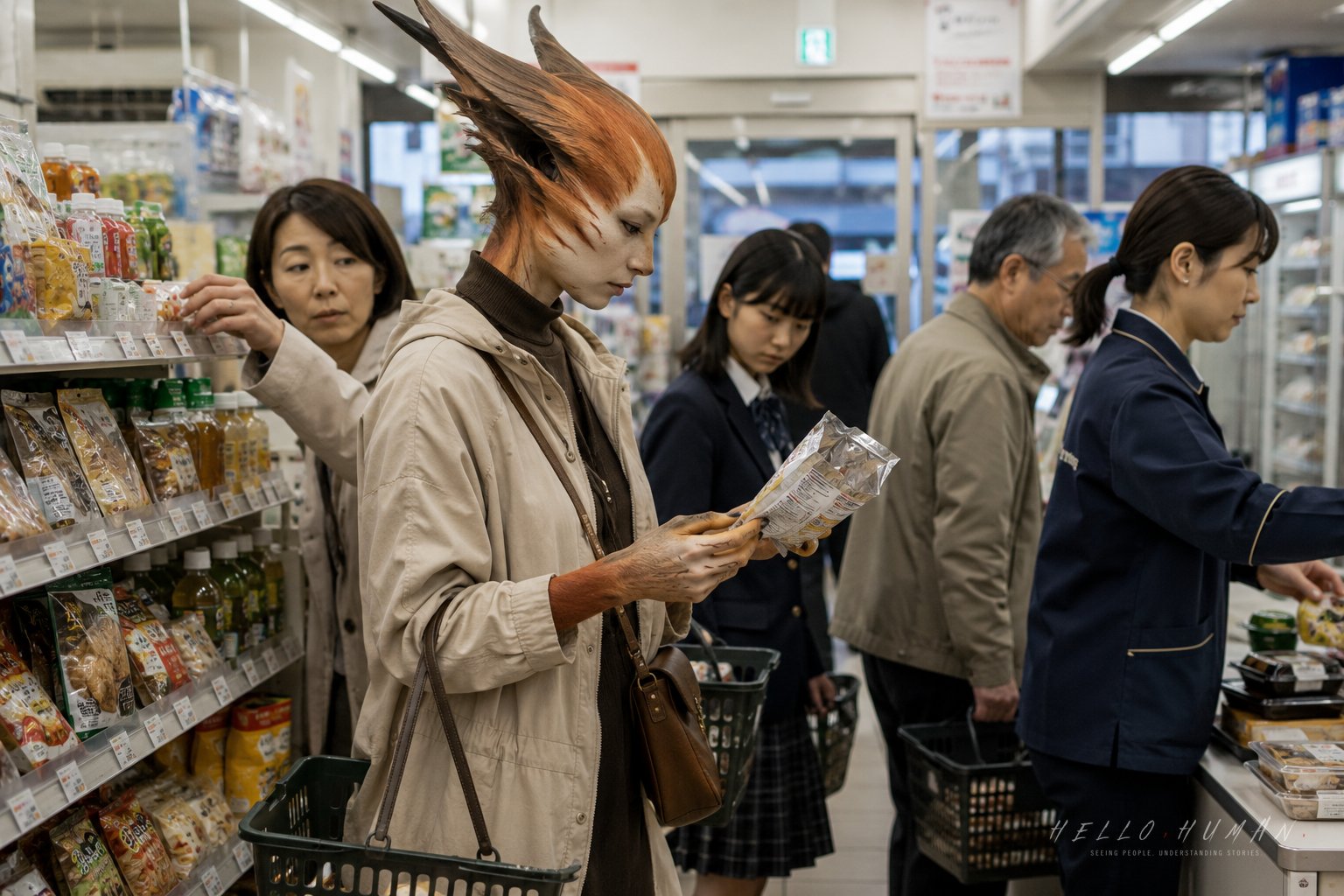
Sayo stood beside the seasonal snack display with her basket hooked lightly over one wrist. Her warm russet skin shifted into smoky cream near the throat, and the integrated ear-base shape of her skull made her head tilt look especially alert.
The package in her hand was sealed, glossy, and full of air. She turned it once, trying to understand the small window on the front, then pinched the top seam with precise low fingers.
The bag opened with a crisp plastic crackle. It was not loud enough to stop the store, but it was distinct enough to change the rhythm around her.
Sayo looked inside for only a second. She wanted to confirm the shape of the snack before paying, the way she might inspect an item at an open market in her own city. She had already decided she would buy it if the contents matched the picture.
But the aisle tightened. A man reaching for bottled tea paused with his hand still in the air. A woman carrying a rice ball and salad lowered her eyes to the opened bag, then looked toward the register without speaking.
The visible cue is the opened sealed snack bag in Sayo’s hand before it has passed through the register.
The Japanese reaction starts with paused hands and quick glances toward checkout rather than open alarm.
Sayo notices that the store did not become noisy, but the people around her have stopped moving normally.
Observation 02The Reactions No One Explained
The man near the bottled tea took a smaller step than he needed, leaving extra room beside Sayo as if the opened bag had created a delicate border around her. He chose his drink without looking directly at her face.
A student in a school uniform stopped comparing two packs of gum. Her gaze moved from the torn seam to the cashier area, then down to her own basket, as if checking the order of things through objects instead of words.
At the end of the aisle, the staff member placing labels on lunch items slowed her hands. She did not rush over. She glanced at the opened snack, then at the small flow of customers moving toward the register, and her voice dropped when she answered another customer.
An older shopper held his basket close to his body and waited for Sayo to move first. His shoulders angled slightly away, not accusing, only making his discomfort visible through distance.
Sayo felt the change reach the base of her skull. The dark shadows around her integrated ear-base anatomy deepened, a natural response when she sensed a queue forming behind her. She had not meant to take anything. She had not tasted it. Still, the unopened boundary had already been broken.
The visible cue is not eating the snack, but breaking the seal before the store has accepted payment.
The Japanese reactions gather through sidesteps, lowered eyes, slowed staff movement, and glances toward the register.
Sayo begins to understand that intention is not the only issue; the store’s payment sequence has been disturbed.
Observation 03What the Traveler Finally Understood
Sayo stopped looking into the bag. She folded the torn top closed with both hands, not to hide it, but to hold it neatly and show that she would not keep browsing with it half-open.
Then she stepped out of the snack aisle and turned toward the register. Her movement came before her words. The people near the display resumed choosing lunch, and the space behind her loosened by a few inches.
At the counter, she placed the opened snack bag by itself, separate from the rest of her basket. Her head lowered slightly, and the amber seams along her fingers dimmed as she waited for the cashier’s response.
The cashier’s expression stayed composed. She scanned the bag, placed it in a small plastic wrapper, and kept the exchange moving with a quiet professional rhythm. The correction did not need a scene because Sayo had already shown she understood the direction of the mistake.
Only then did the meaning become clear to her. In this convenience store, the sealed package was not a sample, not a promise, and not yet hers. Until the register accepted it, opening it made other people responsible for deciding how to react.
The visible correction is physical first: Sayo closes the opened bag, stops browsing, and takes it directly to the register.
The Japanese reaction changes from careful waiting to resumed flow because the next step is now clear.
Sayo understands that payment order protects everyone from awkward judgment, including the customer who made the mistake.
Practical Takeaway
Do not open sealed food, cosmetics, household items, or small goods in a Japanese store before paying. If you need to check something, read the package, compare from the outside, or ask staff while keeping the seal intact.
This matters because the item is still store property until checkout. Even when you fully intend to buy it, opening it early changes the situation for staff and nearby customers, who may feel pressure to respond without embarrassing you.
Pay attention when hands pause, people glance toward the register, voices drop, or staff slow their movement nearby. Those quiet signals often mean the shopping sequence needs to return to the register before anything else happens.