The wind moved through the temple courtyard in Kyoto, lifting the edge of a paper amulet display and pressing dry leaves against the stone path.
At the offering box, coins landed softly one after another, each sound small enough to disappear under the bell rope’s faint wooden creak.
Observation 01The Moment Something Changed

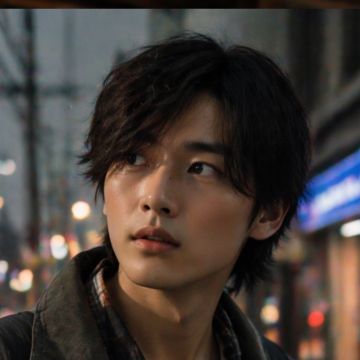
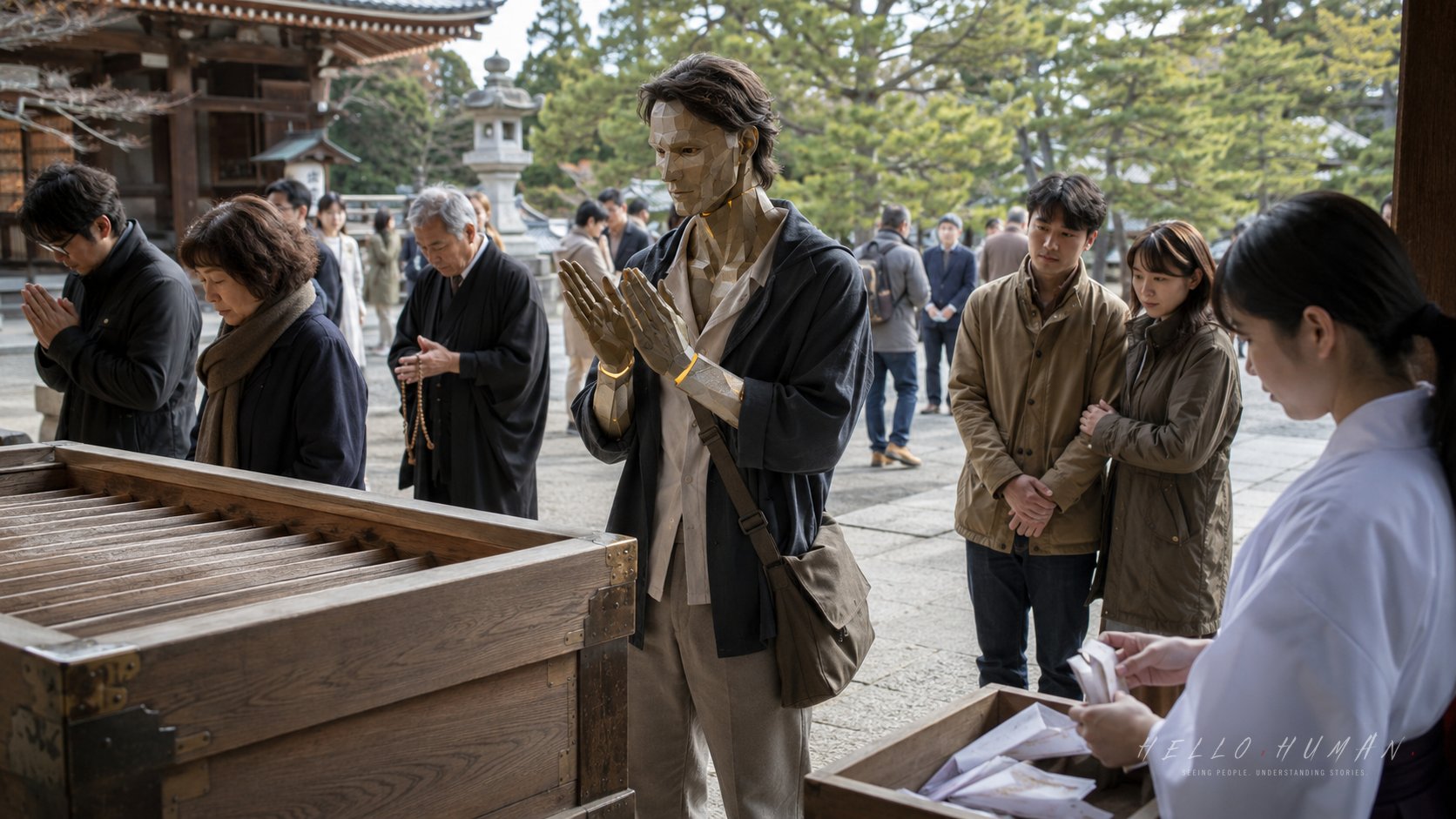
Sava stood in the loose line with both hands folded near his chest. His cheek planes caught the late-morning light in small gray-gold angles, and the seams at his wrists held a restrained glow, like warmth under stone.
He had watched people at another sacred place the day before. Coin, bow, clap, bow. The order had stayed in his body more clearly than the name of the place.
When his turn came, he stepped forward, dropped a coin into the wooden offering box, and gave two sharp claps. The sound cracked through the quiet rhythm, louder than he expected, bright against the low murmur of tourists and the brushing wind.
The rope above the box barely moved. A woman beside the incense stand paused with her hand halfway to her prayer beads. Behind Sava, the next visitor’s shoulders drew inward, not enough to leave the line, just enough to make the space feel smaller.
Sava kept his palms together, but the second after the clap felt different from the second before it. No one spoke. The courtyard simply lost its easy movement for a breath.
The visible cue was not the offering itself, but the loud clap placed into a quieter temple prayer rhythm.
The Japanese reaction appeared in paused hands, tightened spacing, and attention that moved without direct staring.
Sava began to sense that a remembered gesture could become too large when the place had a different rhythm.
Observation 02The Reactions No One Explained
An older worshipper in a dark cardigan lowered his eyes toward the wood grain of the offering box. He did not turn around. His bow became slightly slower, as if he were placing quiet back over the spot where the clap had landed.
A young couple near the side rail stopped their conversation in the middle of a sentence. One of them shifted her phone downward without taking a photo, and the other angled his shoulders away from Sava, leaving a narrow cushion of space.
A temple attendant near a small table of charms moved a stack of envelopes into line. The movement was ordinary, almost too ordinary. But her voice, when she answered another visitor, dropped to a softer level than before.
The next person at the offering box stepped forward and made no clap. Coin, slight bow, hands together. The gesture was quiet enough that Sava noticed the absence more than the action.
Only then did Sava look down at his own hands. His angular fingers were still held apart from the clap, wrist seams faintly glowing at the edges. The sound he had made seemed to remain there, caught between his palms.
The visible cue repeated in contrast: the next prayer used a smaller sequence, with no sharp sound at the offering box.
Japanese visitors adjusted through lowered eyes, softer voices, angled shoulders, and a quiet return to rhythm.
Sava started to understand that no one was rejecting his respect; they were protecting the stillness around it.
Observation 03What the Traveler Finally Understood
Sava stepped half a pace to the side before he understood the meaning in words. First came the physical correction: hands lowered, shoulders softened, palms placed together without sound.
He bowed again, smaller this time. The facets along his cheek and collarbone caught a thin edge of light as his head dipped. His travel jacket, cut with a soft open collar to rest below the geometric neck planes, shifted neatly with the movement.
The people around him did not suddenly smile or explain. The older worshipper finished his prayer. The young couple resumed moving. The attendant’s hands continued arranging envelopes. The courtyard accepted the quieter shape of the moment.
Sava had mistaken one sacred rhythm for all sacred rhythms. At a shrine, clapping can belong to the sequence. At many temples, the space around the offering box often moves differently: less sound, fewer emphatic gestures, more attention to the local pace.
The lesson did not arrive as a rule posted in the air. It arrived as the difference between his loud palms and everyone else’s small hands.
The visible correction was simple: Sava stopped repeating the clap and returned his hands to a quiet prayer shape.
The Japanese reaction softened once the rhythm around the offering box became readable again.
Sava understood that respect in Japan often begins by matching the place before performing what one remembers.
Practical Takeaway
At a temple or shrine in Japan, pause before copying a ritual from memory. Watch the people directly ahead of you, notice whether they clap, bow, ring a bell, or simply place their hands together, and keep your own gesture small until the local rhythm is clear.
This matters because sacred spaces often rely on shared quiet more than spoken correction. A visitor can be sincere and still make a gesture feel too loud if it cuts across the rhythm others are carefully maintaining.
Pay special attention at offering boxes, incense areas, purification basins, and prayer lines where several traditions may look similar from a distance. When the setting is quiet and people are moving gently, smaller is usually safer until you know the sequence.